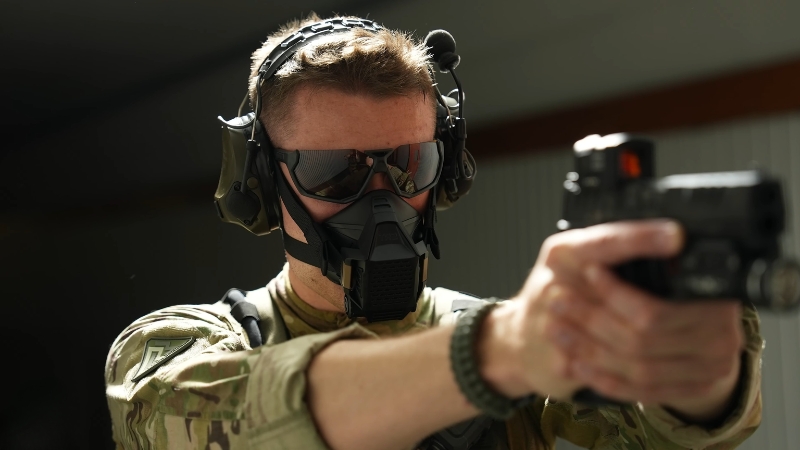
Indoor shooting ranges expose shooters and staff to airborne contaminants created during firearm discharge.
Ventilation systems reduce airborne particles, yet they do not remove every microscopic pollutant immediately.
Fine particles can remain suspended in the air during and after shooting sessions.
Wearing a high-quality anti-pollution mask adds an important layer of respiratory protection in these environments.
Choosing the right mask affects long-term health and daily comfort. Proper protection helps limit repeated inhalation of airborne particles during range visits.
Why Wearing an Anti-Pollution Mask Matters for Your Health
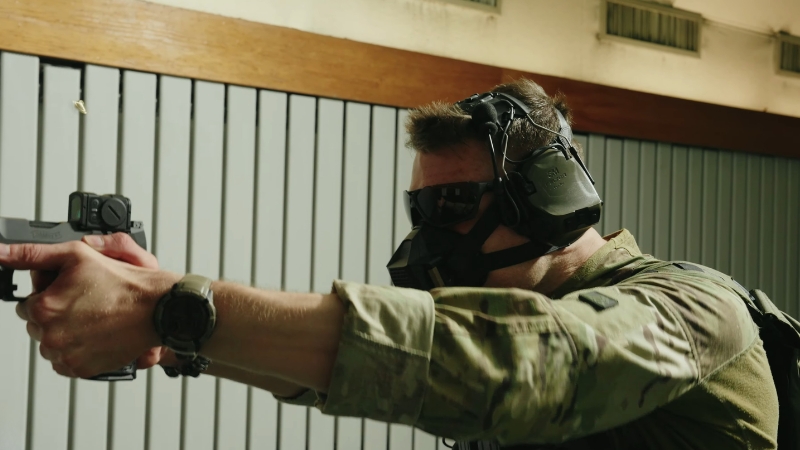
Indoor shooting ranges generate airborne contaminants each time a firearm is discharged.
Combustion gases, primer residue, and microscopic particles enter the air in enclosed spaces where shooters spend extended periods.
Ventilation systems reduce concentration levels, yet suspended particles may remain present during active sessions.
Air inside indoor ranges may contain fine and ultrafine airborne particles generated during firearm discharge.
Repeated exposure over time can increase the risk of respiratory irritation and other health concerns.
Small particles can penetrate deeply into the respiratory tract due to their size, which increases potential impact during frequent visits.
Common concerns linked to repeated exposure include:
- Irritation of the nose and throat
- Persistent coughing or mild breathing discomfort
- Increased sensitivity in individuals with preexisting respiratory conditions
- Accumulation of inhaled particulate matter over months or years of regular shooting
Even well-maintained ventilation systems cannot instantly remove all suspended particles. Air circulation requires time to capture and filter contaminants.
Active firing lanes may temporarily increase localized particle concentration before air systems fully cycle the space.
A properly designed anti-pollution mask helps reduce inhalation of fine and ultrafine airborne particles. Consistent use lowers cumulative exposure during frequent range visits.
Added protection supports long-term respiratory and overall health by limiting the amount of particulate matter entering the lungs during each session.
Standard cloth or surgical masks are not built to filter microscopic particulate matter effectively. Loose fabric construction and gaps along the cheeks or nose often allow air leakage.
Reducing sealing significantly lowers filtration efficiency because inhaled air follows the path of least resistance.
Certified anti-pollution masks are engineered to filter a high percentage of airborne particles while creating a better facial seal.
Structured materials, electrostatic filtration layers, and adjustable components work together to improve protective performance during use in enclosed shooting environments.
Types of Masks Suitable for Shooting Ranges
View this post on Instagram
Different mask types offer varying levels of convenience, durability, and long-term value.
Selection depends on the frequency of range visits and personal preference.
For example, certified premium anti-pollution masks like those found at r-pur.com offer advanced filtration technology beyond standard ratings, with options specifically designed for sport shooting and other high-exposure environments.
Disposable Respirators
Disposable respirators offer convenience and lightweight construction. Many carry N95 or FFP2 ratings, making them suitable for occasional range visits.
Key characteristics include:
- Single-use design intended for limited wear
- Pre-formed shape for basic facial sealing
- Affordable upfront cost per uni
Regular replacement is necessary to maintain filtration effectiveness.
Moisture buildup and particle accumulation reduce performance over time. Frequent shooters may find repeated purchases increase long-term expenses.
Reusable Masks with Replaceable Filters
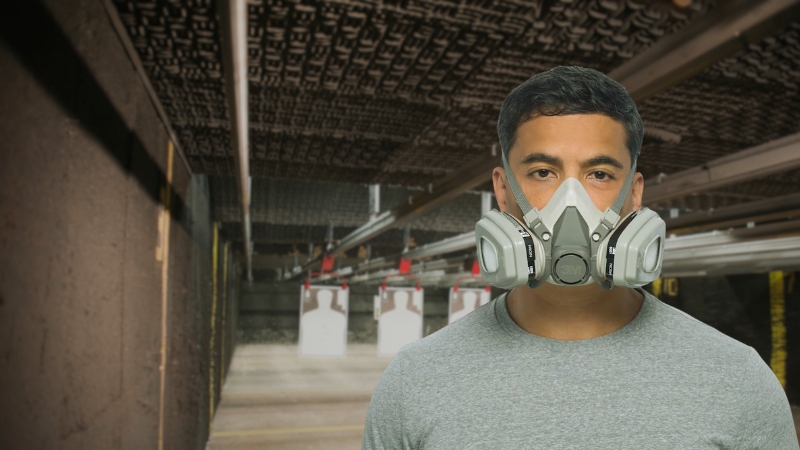
Reusable masks provide durability and long-term cost efficiency. Mask body remains intact while filters are replaced at recommended intervals.
Advantages often include:
- Improved sealing through adjustable head straps
- Replaceable high-performance filters rated N95, N99, or similar
- More stable structure during movement
Frequent shooters and range staff often benefit most from reusable masks equipped with high-performance filters.
Consistent maintenance and timely filter replacement are essential for optimal protection.
Proper cleaning of the mask body prevents contamination and extends product lifespan.
Key Criteria for Choosing the Best Mask
Careful selection ensures reliable protection in indoor shooting settings. Several performance factors determine how well a mask reduces airborne particle exposure during active firearm use.
1. Filtration Efficiency
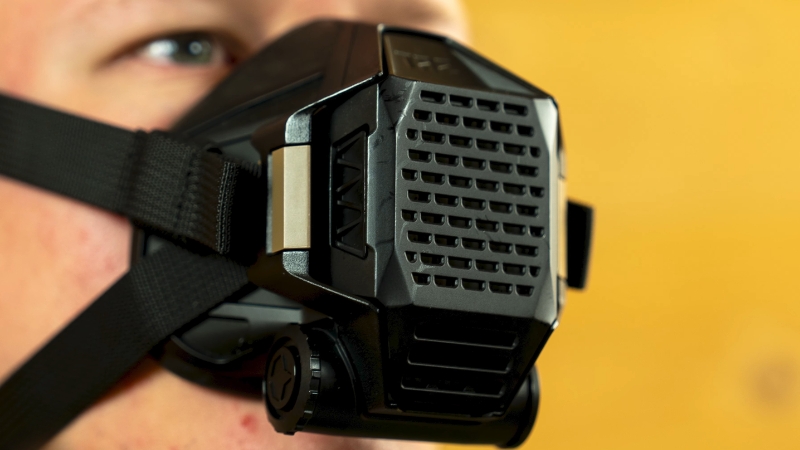
Filtration capability remains the most important feature when evaluating respiratory protection. Certified masks provide measurable filtration performance under standardized testing conditions.
Common filtration ratings include:
- N95 or FFP2, which filter at least 94 to 95 percent of fine particles
- N99 or FFP3, which filter 99 percent or more of fine particles
Higher filtration ratings offer stronger protection in environments with concentrated airborne particulates. Indoor shooting lanes can produce dense bursts of microscopic debris, especially during high-volume firing sessions.
Selecting a mask with a high filtration rating significantly reduces inhalation of harmful particles during shooting sessions.
Frequent shooters and range staff often benefit most from higher-rated options due to repeated exposure.
2. Certified Safety Standards
Verified certification confirms that a mask has passed independent testing for filtration efficiency and structural performance.
Regulatory standards such as NIOSH or CE ensure that performance claims match laboratory results.
Certification provides assurance in several key areas:
- Confirmed filtration percentage under controlled particle testing
- Verified breathability within acceptable resistance limits
- Structural integrity during extended wear
Some advanced masks include multi-layer filtration systems.
Mechanical particle filtration may capture fine debris, while activated carbon layers can assist with odor and limited gas reduction.
Strong particulate filtration remains the primary requirement for indoor shooting ranges, since airborne solid particles represent the main concern.
Verified certification provides confidence that the mask performs as rated under controlled testing conditions and maintains protective capacity during normal use.
3. Airtight Fit and Seal
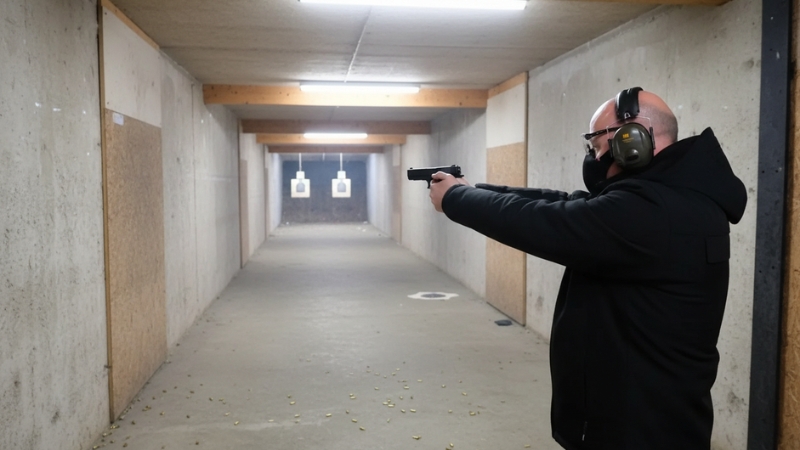
Filtration material alone does not guarantee protection. Effective performance depends on a secure seal against the face.
Air that bypasses the filter through gaps reduces overall effectiveness.
Several features improve sealing performance:
- Adjustable nose bridge that molds securely to facial contours
- Secure head straps or ear straps that maintain tension during movement
- Multiple size options to match different face shapes
- Firm contact along cheeks and chin to limit air leakage
Consistent sealing ensures that inhaled air passes through the filter material instead of entering through gaps.
Even small openings can significantly reduce protection during high-exposure moments.
Proper fit testing at home can include checking for air leaks during exhalation and inhalation. Noticeable airflow near the eyes or cheeks may indicate the need for adjustment or a different size.
4. Comfort and Wearability
Comfort plays a critical role during range sessions that may last an hour or longer.
Discomfort often leads to repositioning or temporary removal, which interrupts protection.
Important comfort considerations include:
- Steady breathing without excessive resistance
- Compatibility with shooting glasses and hearing protection
- Reduced fogging that maintains clear vision
- Stable positioning during head movement
Reusable masks often provide better structural support and cushioning compared to disposable options.
Softer face seals and adjustable straps can reduce pressure points on the nose and cheeks.
Extended shooting sessions demand equipment that supports both safety and concentration.
Comfortable respiratory protection encourages consistent use, which improves long-term health outcomes.
Practical Tips for Safe and Effective Use
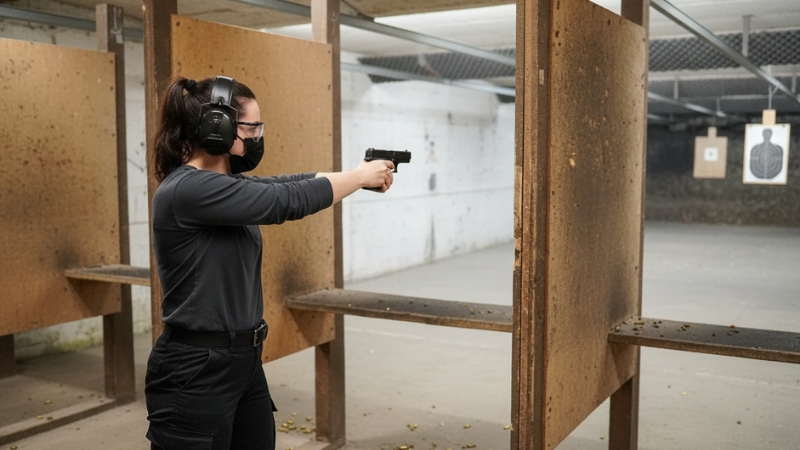
Correct usage determines the overall effectiveness of respiratory protection. Even certified masks require proper handling and routine care.
Replace filters according to manufacturer recommendations. Worn or saturated filters reduce performance and increase breathing resistance.
Signs that replacement may be needed include increased difficulty breathing or visible discoloration.
Before each range session, take the following steps:
- Inspect straps for stretching or damage
- Check the nose bridge for proper adjustment
- Confirm tight contact along the cheeks and chin
- Perform a quick seal check by inhaling and exhaling
Store the mask in a clean, dry location to prevent contamination. Avoid placing it in shooting bags where dust and residue may accumulate.
Combine mask use with good hygiene practices. Hand washing before and after handling the mask reduces the transfer of contaminants.
Reliable ventilation remains essential in indoor shooting facilities, and masks should be used alongside established safety systems.
Consistent and correct use maximizes protective benefits over time and supports long-term respiratory health for regular range visitors.
Summary
Wearing a certified anti-pollution mask in an indoor shooting range environment supports proactive respiratory protection.
High-filtration masks with a secure fit significantly reduce exposure to airborne particles generated during firearm discharge.
Careful attention to filtration efficiency, certification standards, proper fit, and comfort leads to safer shooting sessions.
Investing in effective protective equipment contributes to long-term respiratory health and improved safety during regular range use.